By Mohammed Miah, Gas Safe registered heating engineer
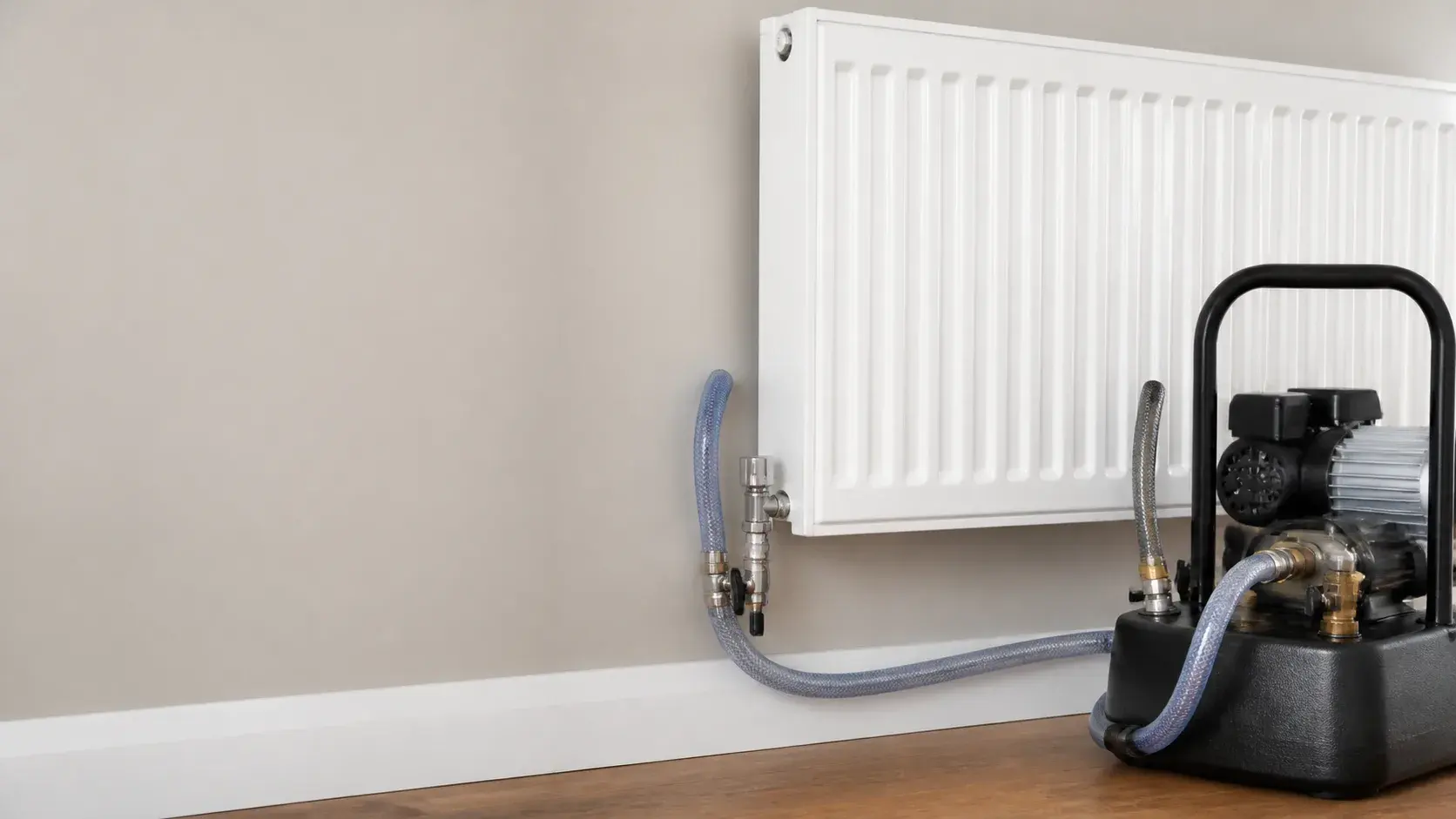
A system flush forces a cleaning fluid through your entire central heating system, every radiator and every section of pipework, at high flow to break up and remove built-up sludge, rust and debris.
Over years, radiators and pipework naturally accumulate this debris. It restricts water flow, makes the boiler work harder to heat the same space, and is one of the most common causes of cold spots and noisy heating.
System flush vs chemical flush
A chemical flush uses a cleaning chemical left to circulate at normal system pressure, often over a longer period, and is a lighter-touch option for a system that isn't too badly affected. A system flush uses dedicated pumping equipment to push fluid through at much higher flow, which clears more stubborn build-up but is a bigger job. We'll recommend whichever is actually appropriate for your system rather than defaulting to the more expensive option.
It's routinely recommended before fitting a new boiler onto an older system, since sludge from the old pipework can otherwise damage a brand new boiler within months.